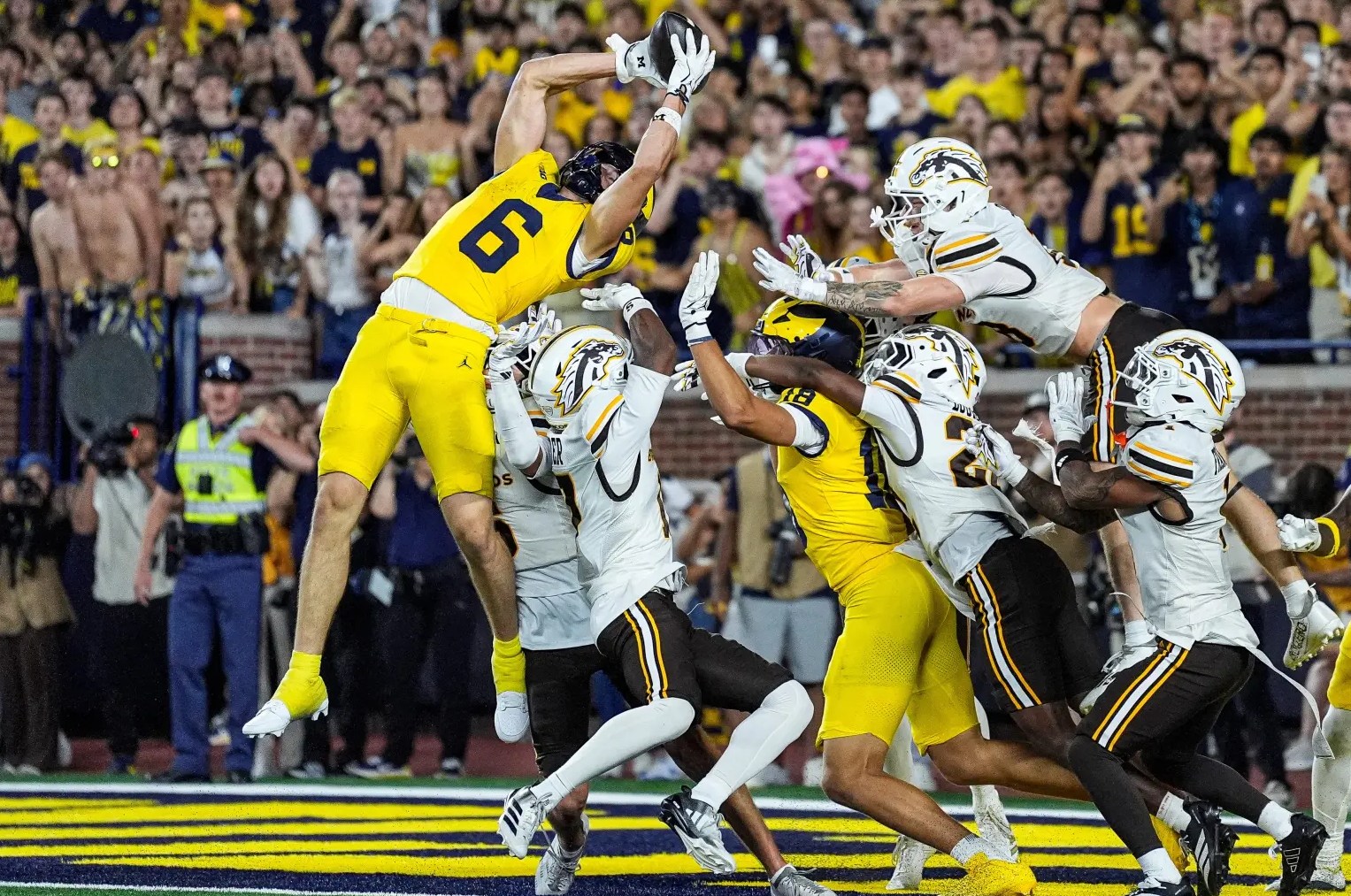
Josh Pate has unloaded on the Big Ten over the decision that handed Michigan a second chance at a Hail Mary — and a 13-12 escape against Western Michigan that the Wolverines had no business getting.
With the fourth quarter expiring, officials put one second back on the clock. Michigan used it to throw again, and JJ Buchanan hauled in the winning touchdown as time ran out at Michigan Stadium, denying the Mid-American Conference visitors an upset they had all but secured.
On "Josh Pate's College Football Show," the host said he had spent Sunday morning fielding calls from people inside the officiating world who wanted their view on the record.
Pate said he had been on the phone with "several officials and several referees" who were emphatic about how badly the sequence was handled, describing the conference office's explanation in unprintable terms and calling the process behind the ruling egregious.
He also posed a hypothetical that has been circulating all weekend: "I would love for someone in the league office to look me in the eye and tell me if Western Michigan was at midfield heaving a prayer up and that exact same set of circumstances were to have played out, that this is the way it would have gone down."
Where Did the Second Come From?
That stray second has become the dominant story in college football. NBC, which carried the broadcast, had its own rules analyst questioning the ruling live on air.
Western Michigan and the MAC have accepted the outcome after the Big Ten issued a statement and released raw video showing how its replay review reached the decision.
NBC returned to the subject Sunday night at halftime of the Apple Cup between Washington and Washington State, where John Fanta reminded viewers that the official game clock is the Big Ten's responsibility, not the network's. "Our cameras are not the official arbiter of timekeeping within the game," he said, noting the conference had published both a statement and its internal replay footage.
Everyone with a formal stake in the result appears ready to move on. The rest of college football clearly is not.